
No more empty rooms: How Zuora reimagined its workspaces
A real-life example of how to simplify your day with Zoom Workplace
In this tour
The goal: make employees’ days easier
Karthik Chakkarapani, senior VP, corporate operations and chief information officer of Zuora has prioritized the “digital workplace experience” as a key pillar for his team.
“The goal is to make it easy for employees in their daily lives. How to find information, quickly connect or collaborate with each other, and get help as soon as possible, whether they’re in a hybrid, in-person, or offline environment,” Karthik said.
His goal is driven by an ongoing commitment to continuously enhance employee experiences, leveraging existing and emerging technologies to adapt to the evolving needs of a global and increasingly hybrid workforce.
Read on to learn how Karthik and Zuora started their journey to a better digital workplace experience with Zoom Spaces.
Featured products
Simplifying overly complicated conference room technology
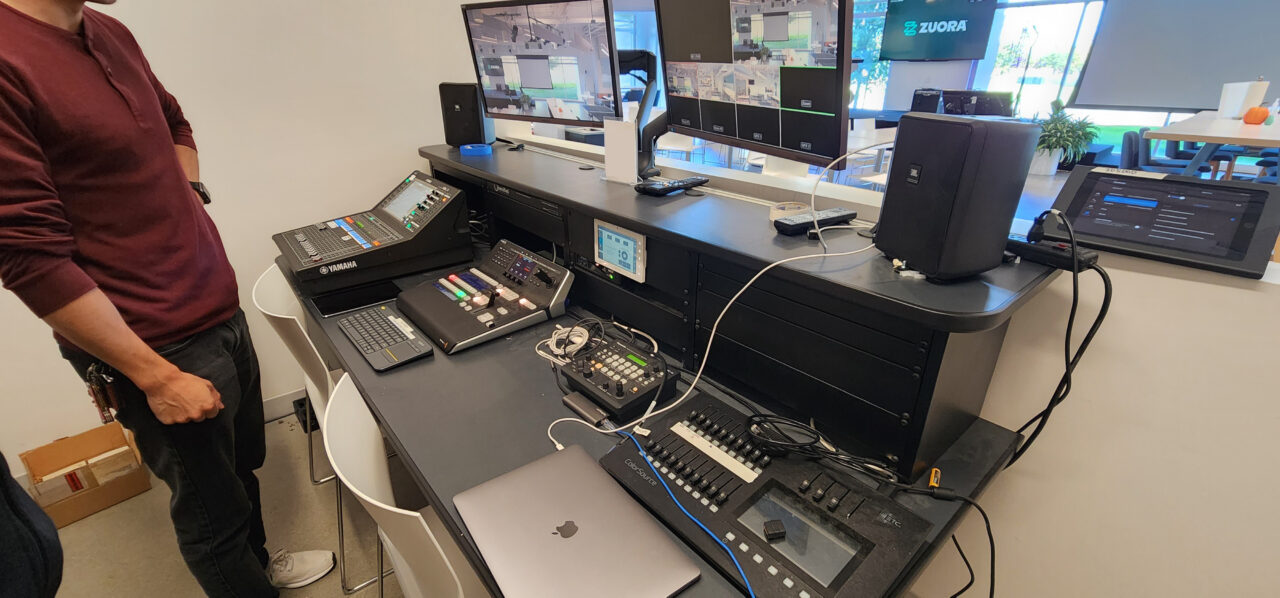
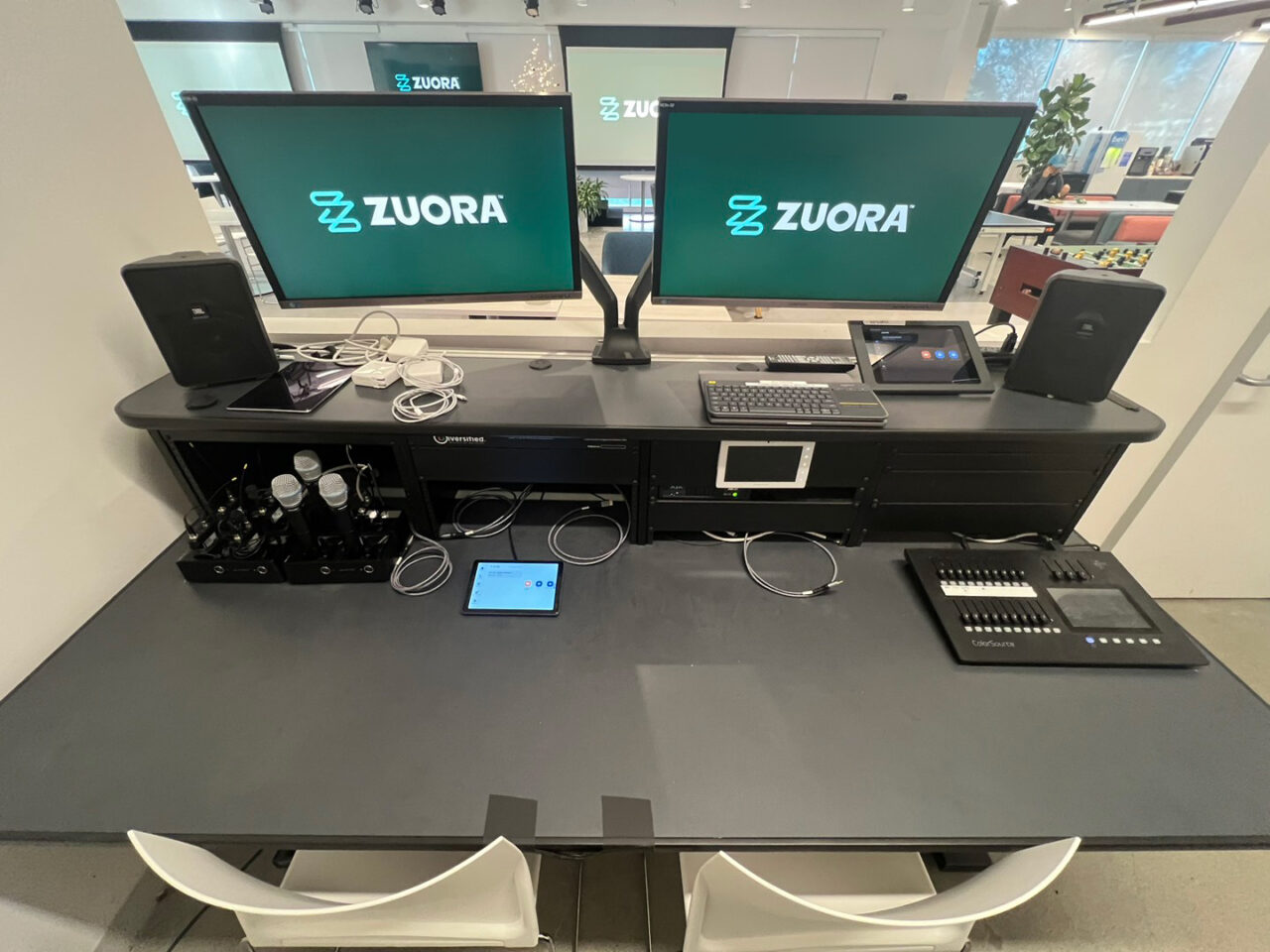
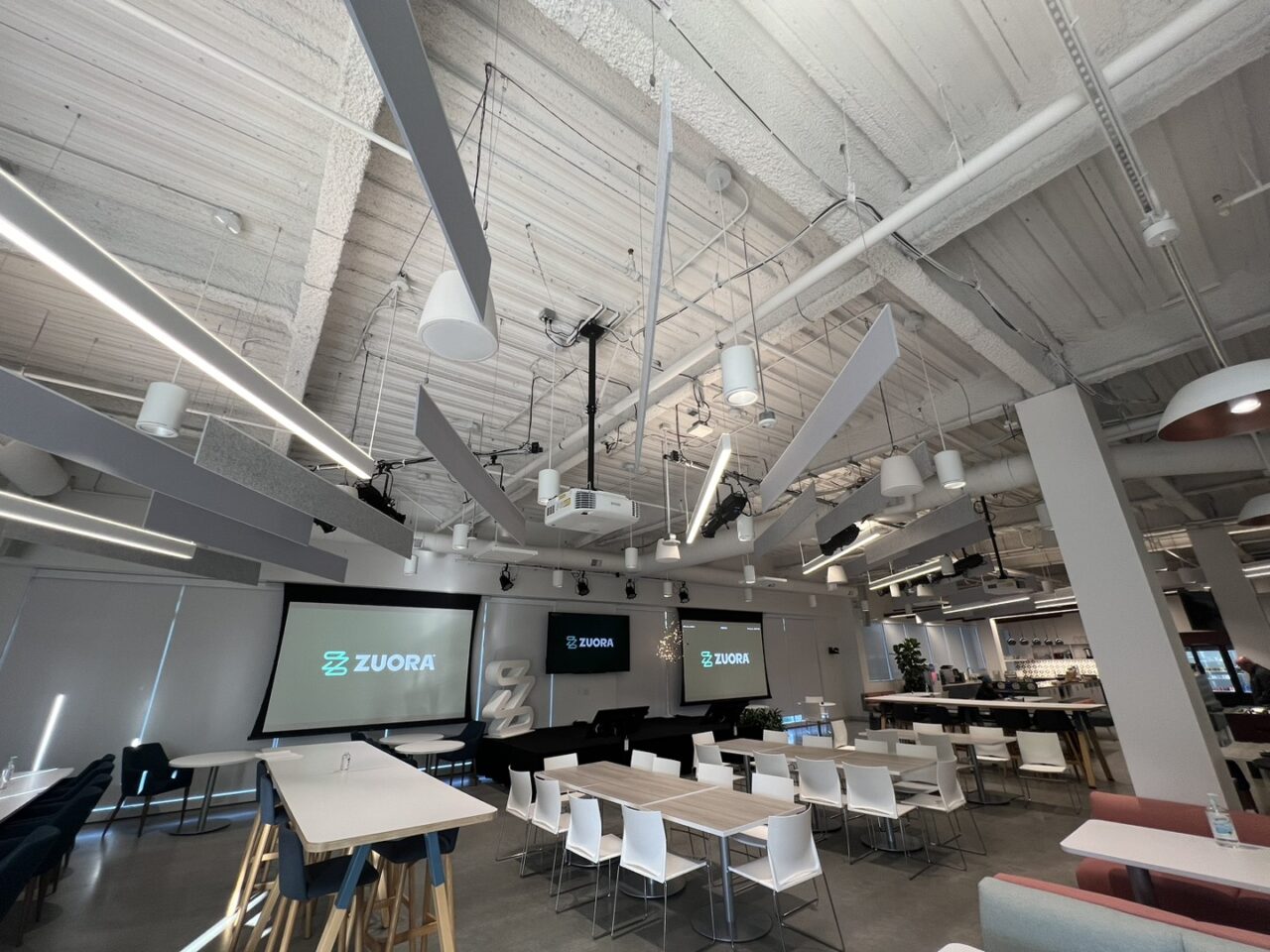
The first step was to update the all-hands arena and training room at Zuora’s headquarters in Redwood City, California.
“It took 20 minutes just to get the system up and running. The audio never worked, multiple video streams never worked. If we had a large conference room we didn’t know who was talking,” said Mark Gill, senior director, infrastructure and services. “Teams couldn’t go in and effectively use the spaces, so nobody used them. When they did, it cost us extra dollars to bring professional production crews in. It was super complicated.”
Pro tip
To learn what was possible, Karthik and Mark visited the Executive Briefing Center at Zoom’s headquarters in San Jose to see Zoom Rooms capabilities in action. “We saw things we didn’t realize Zoom could do,” Karthik said.
Featured products
Custom-designed with employees in mind
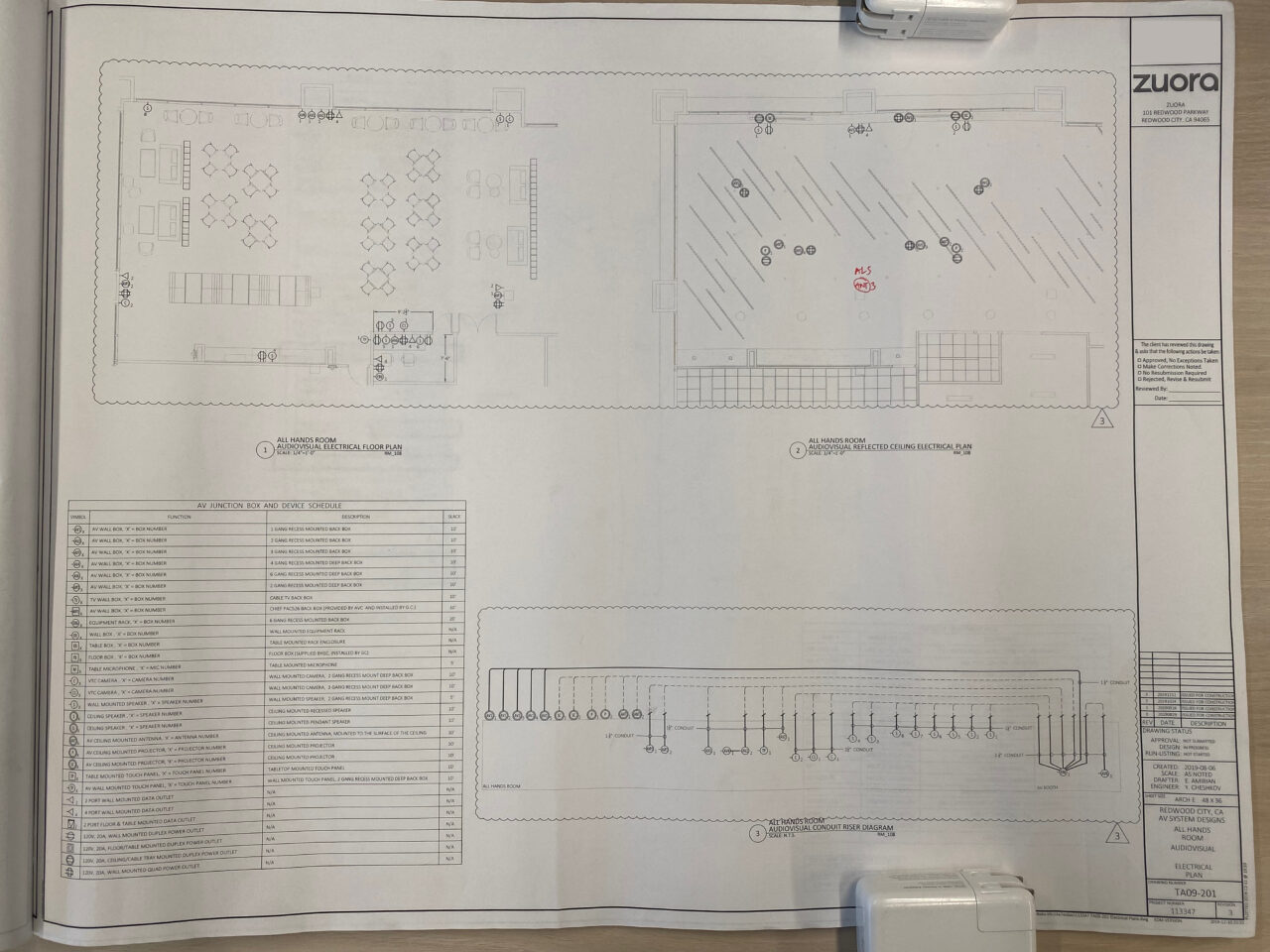
Over two months, Mark and his team partnered with Zoom Professional Services (PSO) on the design and implementation of the all-hands arena and training room.
“We were looking for something that aligned to what employees were used to using in all their rooms and on all their clients. Something that would allow them to just walk in, fire up their laptop, the room comes alive, and everything just works. That was the fundamental goal for the setup,” Mark said.
The PSO team met with Mark and his team over several sessions to gain a deep understanding of use cases for the rooms and assess current capabilities and future needs. Then, the team created a custom proposal and design with recommended hardware.
“Zoom’s PSO team was great. They actually came in, so they understood what was there, and they understood where we needed to go. At the end of the five days for implementation, we had a system that worked. People can now hop in there and do what they need to do,” said Mark.
Featured products
Additional resources
Positive feedback, increased utilization
Karthik and Mark received positive feedback at their first all-hands in the newly upgraded Zoom Room, including from Zuora’s CEO.
“One of the best things I heard was, ‘This performance is so awesome. The sound quality is so good.’” said Karthik.
“We had a number of people tell us ‘Oh, my gosh, we’ve been trying to fix these rooms for years and finally somebody else figured out how to fix it the right way,’” Mark added.
Both the all-hands arena and training room are used on a regular basis now by employees.
“Before, our training room was foreign. Nobody would touch it. And now, it’s utilized 75% each week. You walk in and turn it on, and it just works. The all-hands space that supports 100 people works just like every other room. It is a very simple transition for our employees to move to a very robust meeting style that they couldn’t do before,” Karthik said.
Featured products
Looking ahead
According to Karthik, the Zoom Rooms transformation was “a perfect example of how we make the lives of employees easier.”
Next on the list, Zuora is adding Zoom Visitor Management and enabling Zoom Phone.
“My goal is to see how I can enable and leverage the best technologies to drive a more modern workplace that is efficient and effective for employees to do their day-to-day work,” Karthik said. “And Zoom was our first enabler to get it done.”